
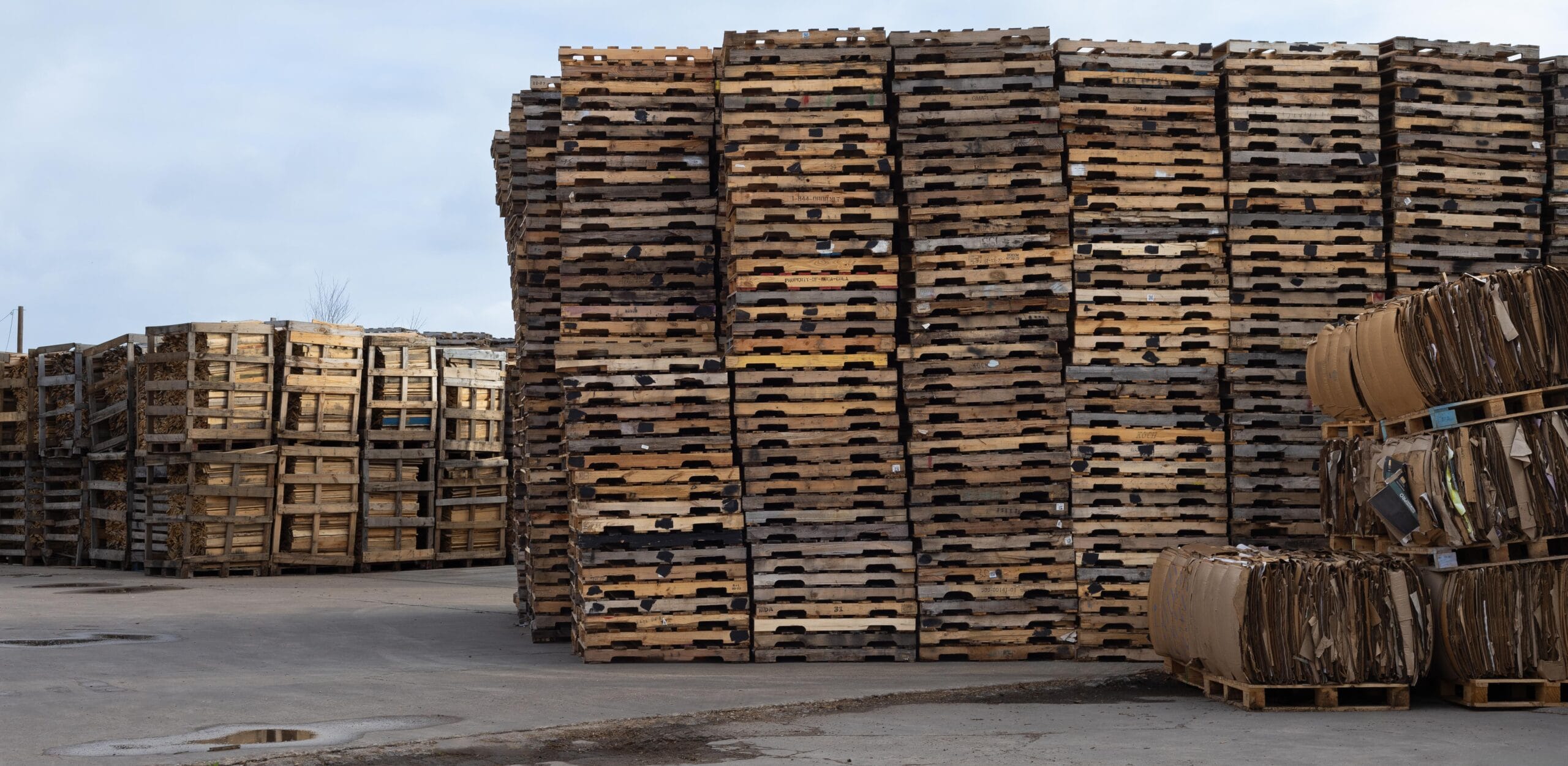
How to Store Pallets Safely at Your Facility
Pallets are tough and built to work hard. But if you store them the wrong way, they can become a real hazard. Stacks can fall. Fires can spread faster. Workers can get hurt. The good news is that safe pallet storage is not complicated. You just need to know a few basic rules and follow them every day.
This guide walks you through what you need to know, including OSHA guidelines, stacking limits, and fire code basics.

Why Safe Pallet Storage Matters
Wooden pallets are heavy. A standard GMA pallet can weigh 30 to 70 pounds. Now think about a stack of 10 or 15 of them. If that stack tips over, someone could get seriously hurt. Beyond the weight risk, wood is easy to burn. A pile of pallets can go up in flames fast if a fire starts nearby.
Following safe storage practices protects your workers, your building, and your business.
How High Can You Stack Pallets?
This is one of the most common questions facility managers ask. The answer depends on whether you are storing pallets indoors or outdoors, and what fire protection systems your building has.
Outdoors: According to NFPA 1, the National Fire Protection Association’s Fire Code, idle pallet stacks stored outside should not exceed 15 feet in height and should not cover an area larger than 400 square feet. You should also keep at least 8 feet of space between separate pallet stacks.
Indoors: OSHA does not set a specific number of feet for how high you can stack pallets inside a building. Instead, OSHA standard 29 CFR 1910.176(b) requires that all stacked materials be stable and secure against sliding or collapse. In practice, that means your stack height must be whatever height you can safely maintain without creating a tipping or collapse hazard. The other hard indoor limit is sprinkler clearance — more on that below.
The type and condition of your pallets matter too. Damaged or broken pallets are not stable. Never stack them with good pallets. They can shift or collapse without warning.
If you are not sure about the rules for your specific building or industry, check with your local fire marshal. They can walk you through what applies to your facility.
OSHA Guidelines for Pallet Storage
OSHA does not have one single rule just for pallets. But several general industry standards apply directly to how you store them.
Keep stacks stable. OSHA 29 CFR 1910.176(b) requires that material storage must not create a hazard. Bags, containers, bundles, and pallets stored in tiers must be stacked, blocked, interlocked, and limited in height so that they are stable and secure against sliding or collapse.
Keep aisles clear. OSHA 29 CFR 1910.176(a) requires that aisles and passageways be kept clear and in good repair, with no obstructions that could create a hazard. Pallet stacks should never block a fire exit, emergency door, or main aisle.
Inspect pallets regularly. OSHA expects employers to identify and remove unsafe equipment. This includes broken pallets with cracked boards, missing blocks, or protruding nails. A damaged pallet is a tripping hazard and a structural risk in any stack.
Train your workers. Everyone who handles or stores pallets should know the safety rules. This includes forklift operators, warehouse staff, and anyone who moves pallets by hand.
Keep the work area clean. OSHA 29 CFR 1910.176(c) requires that storage areas be kept free from accumulation of materials that create tripping, fire, explosion, or pest harborage hazards. Loose boards, nails, and pallet debris on the floor must be cleaned up right away.
Stay below your sprinkler heads. OSHA 29 CFR 1910.159(c)(10) requires a minimum vertical clearance of 18 inches between any sprinkler head and the materials stored below it. This is one of the most commonly cited violations in warehouses. If your stack is too tall, it can block sprinkler water from reaching a fire when it counts most.
At JC Pallets Co., we have been helping DFW businesses with their pallet needs for over 45 years. Part of being a good partner means helping our customers get the most out of their pallets safely. Learn more about who we are.

Fire Code Basics for Pallet Storage
Wood burns. So fire marshals and insurance companies pay close attention to how businesses store pallets, especially large quantities of them.
Keep pallets away from heat sources. Pallets should never be stored near open flames, electrical panels, heaters, or anything that gets hot.
Separate indoor and outdoor storage. If you store pallets outside, NFPA 1 requires that idle pallet stacks be kept at least 8 feet from any property line, and at a safe clearance distance from your building that varies depending on how many pallets you are storing and how your building is constructed. For anything beyond a small quantity of pallets, check with your local fire marshal or a fire protection engineer for the specific distance that applies to your setup.
Limit indoor storage quantities. Many fire codes put limits on how many pallets you can keep inside at one time. The exact number depends on your building size, ceiling height, and sprinkler system. Indoor pallet storage generally requires a properly designed automatic sprinkler system. The NFPA recommends consulting a fire protection engineer when storing large quantities of pallets indoors to make sure your sprinkler system is designed for the hazard.
Do not block sprinkler heads. As noted above, OSHA requires 18 inches of clearance below every sprinkler head. Pallet stacks that are too tall can prevent water from reaching a fire. This one rule alone should guide how high you stack indoors.
Do not store pallets in stairwells or near exits. Even one extra pallet in the wrong spot can be a fire code violation and a serious danger to workers trying to evacuate.
If you are storing ISPM-15 heat-treated pallets for international shipping, those pallets have already been through a high-temperature treatment process. That does not make them fireproof, so the same storage rules still apply.
Tips for Organizing Your Pallet Storage Area
A little planning goes a long way. Here are some simple tips to keep your storage area safe and organized.
Sort pallets by type and condition. Keep new pallets separate from used ones. Pull out any damaged pallets right away and decide if they should be repaired, recycled, or thrown away.
Use a flat, stable surface. Pallets stored on uneven ground are more likely to tip. Concrete or asphalt is ideal. Avoid storing pallets on soft ground or near drainage areas where the ground can shift.
Stack pallets squarely. Every pallet in the stack should line up with the one below it. Uneven stacks are unstable stacks. Never mix different pallet sizes in a single stack — an odd-sized pallet near the bottom can compromise the stability of everything above it.
Keep pallets away from combustible materials. Cardboard, foam, oil, and other flammable items should be kept well away from your pallet storage area.
Label your storage zones. If your facility handles large volumes of pallets, consider marking specific zones for empty pallets, full pallets, recycled pallets, and damaged pallets. Clear zones reduce confusion and make inspections easier.
What to Do With Pallets You No Longer Need
Damaged pallets and excess inventory are common problems. The worst thing you can do is let them pile up in a corner and become a safety hazard.
JC Pallets Co. offers a pallet recycling program that makes it easy to get rid of pallets you can no longer use. In some cases, you may even earn money back for high-quality used pallets. Recycling is also the responsible choice — it keeps wood out of the landfill and puts materials back to work.
If you just need to get rid of pallets quickly and responsibly, learn about our pallet disposal options in the Fort Worth area.
Need New or Custom Pallets for Your Operation?
Sometimes the safest storage situation starts with getting the right pallets from the beginning. If your current pallets are the wrong size, weight, or construction for your needs, they may be creating storage problems without you even realizing it.
JC Pallets Co. carries standard GMA pallets in stock and ready to go. We also build custom pallets to your exact specs if your product or operation requires something different.
Talk to a Local Pallet Expert
Safe pallet storage is not just about following rules. It is about protecting the people who work for you and the business you have built. When you work with a local partner who knows pallets inside and out, you get more than just product — you get guidance.
JC Pallets Co. has been serving Fort Worth and the DFW Metroplex for over 45 years. We are a family-owned business, and we take pride in helping our customers make smart decisions about their pallet operations.
Have questions about your storage setup, your pallet needs, or how to get started with our recycling program? Reach out to our team or call us directly at (817) 905-7095. We are happy to help.
Sources
- OSHA 29 CFR 1910.176 — Handling Materials, General
- OSHA 29 CFR 1910.159 — Automatic Sprinkler Systems
- NFPA 1 and Idle Pallet Storage — NFPA.org
- NFPA Guidelines for Idle Pallet Storage — FireAlarm.com
- Fire Protection Requirements for Idle Wood Pallet Storage — National Fire Sprinkler Association
- Stacking Pallets: OSHA Regulations — BHS Industrial Equipment